




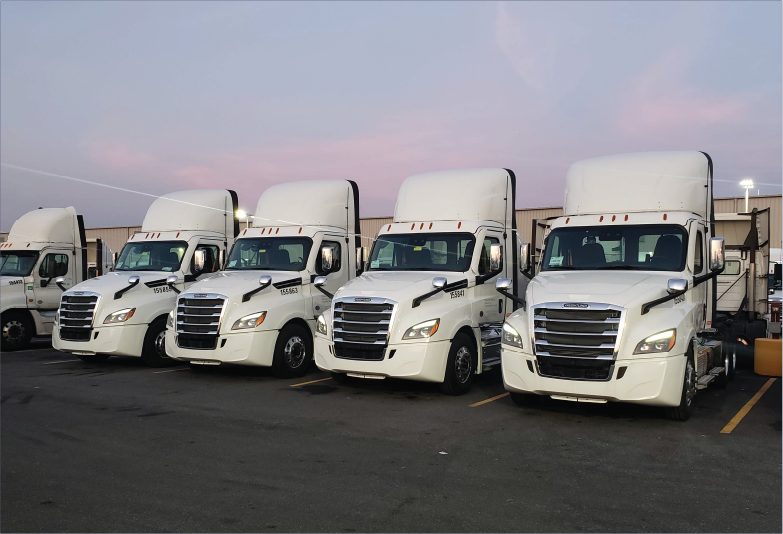
How Technology Is Driving The Transportation Industry Toward A Sustainable Future
Mar 14, 2024 | Innovation + Technology
Every industry has a role to play in reducing greenhouse gas emissions, and transportation, particularly trucking, is no exception. For decades, we have worked tirelessly to improve sustainability—focusing on everything from fuel efficiency to reducing the overall carbon footprint of our operations. Yet, as we face the challenges of climate change and growing environmental concerns, the need for further transformation has never been more urgent.
Fortunately, we are now at a technological tipping point. Innovations that were once only concepts—like alternative fuels, electric vehicles (EVs), and autonomous technology—are rapidly moving toward practical, real-world application. With the right investments and a clear vision, the transportation industry, from final mile delivery to linehaul operations, has the opportunity to make significant strides toward a sustainable future, reducing emissions in ways that were previously thought to be impossible.
Logistics, Maintenance, and Efficiency Through Technology
The most immediate and tangible environmental impacts in transportation are being driven by technology that enhances supply chain efficiency. Among the many innovations, one area of improvement lies in the reduction of empty miles—when trucks drive without carrying freight. This is a longstanding issue within the industry, but with the integration of machine learning and artificial intelligence (AI), the opportunity to make meaningful reductions has never been greater.
Route optimization has long been a key focus. Today, leveraging real-time data—like traffic conditions, weather updates, and accident alerts—can dramatically reduce idle time and unnecessary detours. By optimizing routes and scheduling more effectively, we reduce fuel consumption, limit emissions, and make the entire logistics network more efficient, from last-mile delivery to linehaul operations. For example, FedEx linehaul services benefit from AI-driven technology that allows them to optimize their national freight network, minimizing fuel use while ensuring timely deliveries.
Maintenance is another critical area where technology is helping make the transportation sector more sustainable. Predictive maintenance systems are becoming standard in the industry, utilizing Internet of Things (IoT) sensors and onboard diagnostic tools to monitor the health of vehicles in real time. These systems not only alert drivers about potential issues before they become serious problems but also ensure that trucks operate at peak fuel efficiency. Regular, data-driven maintenance can extend the lifespan of vehicles, minimize breakdowns, and reduce emissions from idle or broken-down trucks. For carriers like Sigma Transport, maintaining fleet efficiency is crucial for both operational sustainability and environmental impact.
Exploring Alternative Fuels for the Future
Vehicle emissions have improved significantly over the past few decades, particularly in diesel technology. Advances in exhaust systems and fuel-refining processes mean that fossil fuels burn cleaner than ever before. However, with global demand for transportation continuing to rise, it’s evident that we must look beyond current fuel sources to meet future sustainability goals.
Alternative fuels have been on the horizon for decades, but today’s rapidly advancing technologies demand we take a more serious and pragmatic approach. We must move beyond theoretical discussions and begin actively exploring and testing viable alternatives. Key fuel options we’re monitoring include electricity, hydrogen, and natural gas—each of which offers distinct advantages and challenges.
- Electric Vehicles (EVs): The promise of EVs lies in their ability to run on renewable energy sources and produce no tailpipe emissions. However, for long-haul trucking, EVs present significant obstacles:
- Grid Capacity: The U.S. electrical grid would need massive upgrades to accommodate a nationwide fleet of electric trucks. A study by the American Transportation Research Institute reveals that an all-EV vehicle fleet would require over 40% of the current national energy production.
- Battery Limitations: While battery technology has advanced, current solutions still face major drawbacks, particularly in heavy-duty trucks. Long-range batteries remain too bulky and inefficient for the heavy demands of commercial trucking. Additionally, the environmental costs of extracting materials for these batteries—like cobalt and lithium—pose significant environmental and ethical challenges.
- Charging Infrastructure: The development of widespread EV charging infrastructure for trucks presents significant challenges, from cost to location. Truckers will need access to fast-charging stations, and long-term parking solutions will need to accommodate extended charging times of 8–12 hours.
- Hydrogen: Hydrogen fuel is another promising alternative. It can be used in fuel-cell technology and in internal combustion engines. Hydrogen fuel cells offer a clean, efficient way to power vehicles, but currently, hydrogen engines consume more energy than they produce, making them unfeasible for large-scale use. Nonetheless, research is progressing, and we may see breakthroughs in the coming years.
- Natural Gas: Natural gas is an abundant, cleaner-burning fossil fuel that has already shown promise in reducing emissions compared to traditional gasoline and diesel. It is more affordable and available, but widespread adoption is hindered by the need for further infrastructure investment and testing to ensure long-term viability for the trucking sector.
While no one alternative fuel solution is a perfect fit, the good news is that progress is being made. The challenges outlined don’t signal the end of the road for alternative fuels—they underscore the complexity of transitioning from fossil fuels to more sustainable options. Transportation companies like Sigma Transport have a crucial role to play in piloting these technologies and forging partnerships with startups, governments, and other stakeholders to bring these solutions to scale.
The Role of Autonomous Vehicles in Sustainable Transportation
Beyond fuel alternatives, autonomous vehicles (AVs) represent a paradigm shift for the transportation industry. Advanced AI algorithms can help AVs optimize routes continuously, adapting in real-time to road conditions and weather, all while reducing fuel consumption. Theoretically, autonomous vehicles could drive down emissions by ensuring trucks operate with precision, making real-time adjustments that optimize fuel efficiency and reduce waste.
From a technical standpoint, autonomous vehicles are entirely feasible, with many of the required technologies already in place. However, issues of safety and liability remain significant barriers to widespread adoption. Public perception also plays a crucial role in acceptance—autonomous trucks must be seen as just as safe, if not safer, than human-operated vehicles.
In the short term, a hybrid model of human and machine-driven trucks is the most likely scenario. Many modern trucks already feature Advanced Driver Assistance Systems (ADAS), such as automatic braking, lane-keeping assist, and adaptive cruise control. These systems will evolve over time, gradually transferring more responsibility to the vehicle while keeping human drivers in the loop as overseers and operators.
Looking further ahead, we might see fully autonomous trucks operating on long-haul routes, connected to national networks of transportation hubs strategically located outside urban centers. These hubs could act as transfer points, where loads are offloaded from autonomous trucks to human-driven vehicles for shorter, more complex routes—like final mile deliveries in cities. This model would not only optimize fuel efficiency but also give drivers more regular home time while still utilizing autonomous vehicles for the long stretches of the journey.
For example, FedEx linehaul operations could be among the first to deploy autonomous trucks for long-distance routes, improving efficiency while maintaining human oversight for final-mile deliveries that require nuanced decision-making and adaptability.
Investing in Change and Industry-Wide Commitment
The transportation industry is at a critical crossroads. We can see a sustainable future on the horizon, but the journey is far from over. Industry leaders must continue to champion existing technologies, such as predictive maintenance, supply chain optimization, and alternative fuel adoption, while also investing in emerging solutions like EV infrastructure and autonomous vehicles.
To make this transformation a reality, the industry needs the active involvement of investors, government bodies, and private companies alike. Widespread adoption of new technologies requires large-scale collaboration to overcome the financial and logistical hurdles that still stand in the way. Innovation is essential, but so is a collective commitment to sustainability at every level of the transportation ecosystem.
As we move forward, the transportation industry’s efforts to reduce its environmental impact will depend not only on cutting-edge technologies but also on a shared vision for a cleaner, more efficient, and more sustainable future.